What CSDM 3.0 means for the Walk and Run phases, which use cases the model supports at this point, and how Data Content Manager keeps the data behind them in shape.
Author: ck9ax
-
CSDM 3.0 Webinar Series: Crawling with DCM
Mark Bodman (ServiceNow) on what is new in CSDM 3.0 and what matters in the Crawl phase, followed by a hands-on demo of kick-starting CSDM with Data Content Manager.
-
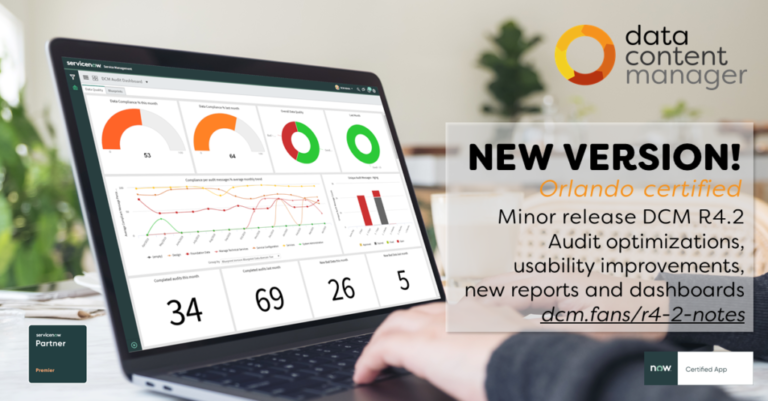
DCM R4.2 Published
DCM R4.2 is a minor release focusing on optimizing audits. Changes have been made to ensure that bigger audit runs do not interfere with the rest of the platform.
-
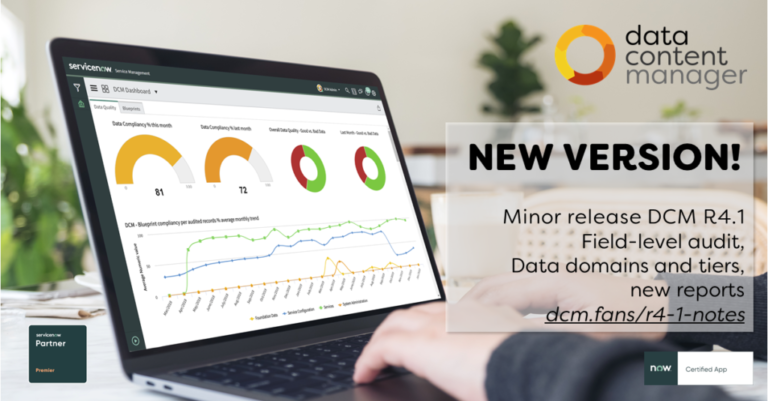
DCM R4.1 is Now Available!
DCM R4.1 includes one very good addition to the audit, that being the Field Level Audit. Another great enhancement for managing and auditing the blueprints is the addition of Data Domains. These data domains and tiers are used to group and manage blueprints and audit results.
-
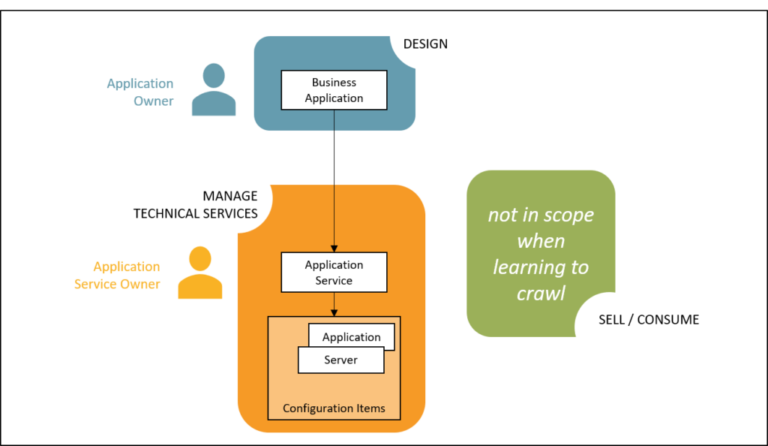
Common Service Data Model – Learning to Crawl
This blog talks briefly about the CSDM Crawl phase in ServiceNow's Common Service Data Model v2.
-

Audit Alert Correlations – Unique Audit Messages
By installing the Data Content Manager (DCM) application into your ServiceNow environment, you can audit your service data against best practice blueprints or blueprints you have created yourself. Read here how.
-
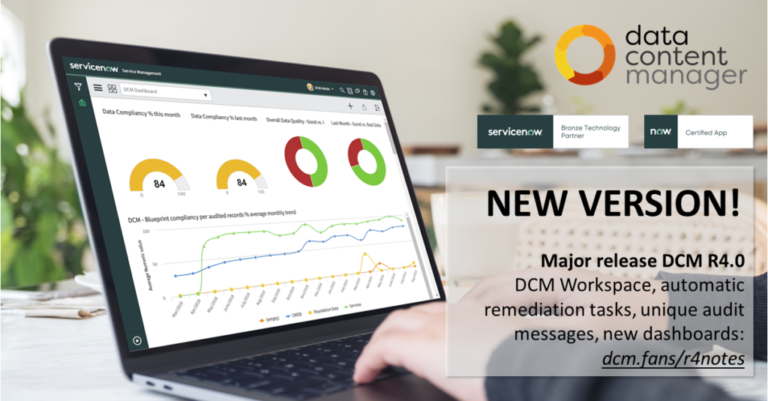
Data Content Manager R4 is Now Available
DCM R4 introduces a new concept of Unique Audit Message which represents a unique version of possibly multiple audit messages related to the same data. And this unique message together with ?blueprint elements? that were introduced in R3.3 will lay a foundation for ?remediation workspace? which is the other main additi
-
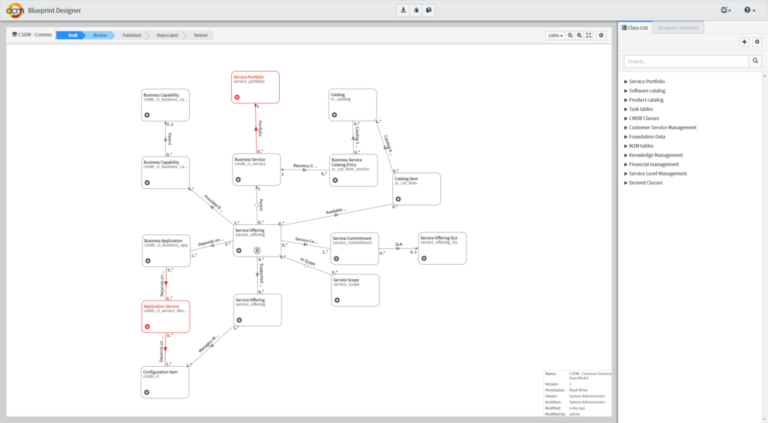
ServiceNow CSDM Updated & Example of an Actual Service Portfolio Data Model
ServiceNow published some updates to their recent Common Service Data Model whitepaper. In this article I'm showing some more detailed data models for the same.
-
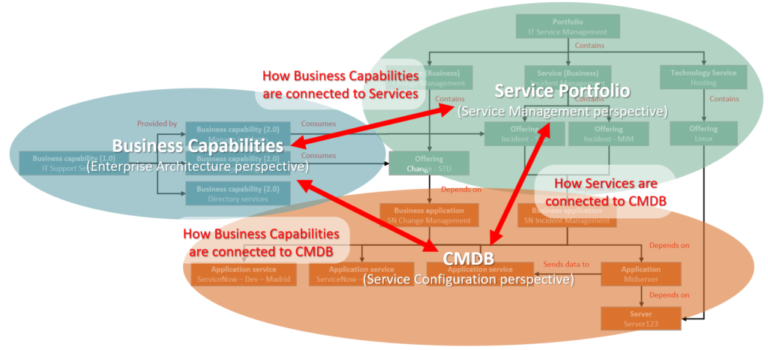
Three Perspectives to Common Services Data Model
In this article I will go through the "ITSM / ServiceNow example" from that whitepaper and introduce an alternative version. And discuss about the common data model drawn from three different perspectives.